
You Don't Own Your Games. Europe Just Confirmed It, Politely.
Nearly 1.3 million people signed a petition asking Europe to guarantee games stay playable after shutdown. Brussels said it legally can't, and offered a voluntary code instead.
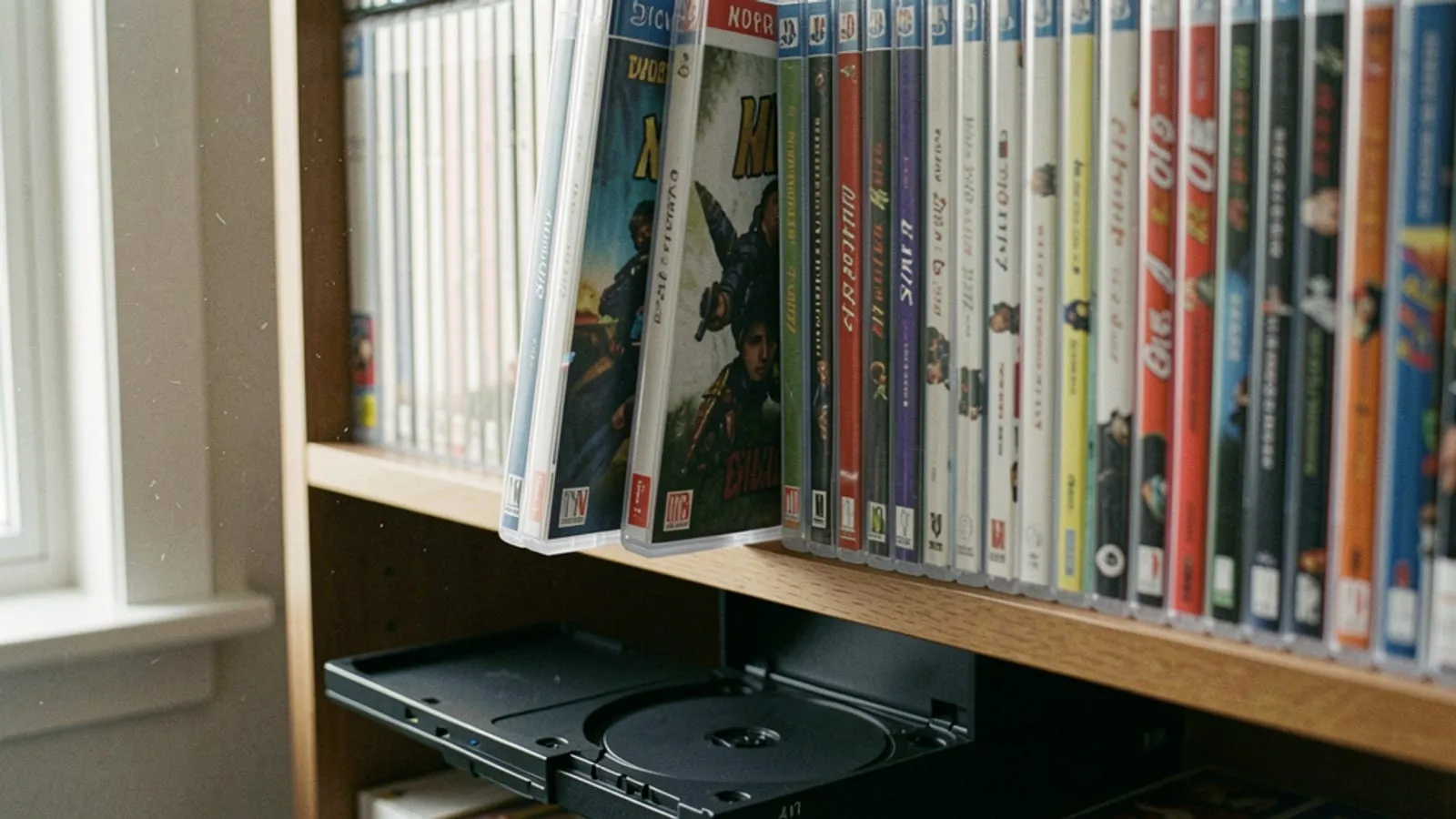
1,294,188 people signed their name to a petition that asked Europe for one thing: don’t let a company sell someone a game and then switch it off forever without giving them a way to keep playing. The European Commission checked every signature it could, confirmed 89% of them as valid, and in June said no. Not a hard no. A soft, bureaucratic, we-hear-you no. But a no.
That’s the headline event of 2026 for anyone who cares about what “buying” a game actually means, and it landed in the same year Sony announced it’s phasing out physical PS5 discs, a hero shooter called Highguard went from launch day to digital graveyard in 45 days with zero way to keep playing it, and New York’s Attorney General decided Valve’s loot boxes are, in her words, “quintessential gambling.” None of these are separate stories. They’re the same argument playing out in three different rooms, and in every room the industry is winning.
The number that didn’t matter
The whole thing traces back to Ubisoft killing The Crew in April 2024, an always-online racing game that stopped functioning the moment Ubisoft flipped the server switch, taking every copy anyone had ever bought with it. A YouTuber named Ross Scott had been making videos about game preservation for years, and this was the case that finally gave the argument a name people could organise around: Stop Killing Games.
The European Citizens’ Initiative version of the campaign launched 2 April 2024 and ran until 31 July 2025, ending with roughly 1,448,271 signatures. After verification, 1,294,188 were confirmed valid on 26 January 2026, comfortably clearing the threshold the EU requires before it has to formally respond. That’s not a Change.org stunt. That’s the machinery of direct democracy in Europe actually working the way it’s supposed to.
Along the way there were real hearings, not just a form letter. UK Parliament debated the issue on 3 November 2025, and Parliamentary Under-Secretary Stephanie Peacock told MPs the government wouldn’t be amending consumer law to force the issue. Then, on 16 April 2026, the European Parliament held a public hearing where Scott made the argument as plainly as it’s ever been made: unilaterally disabling a product after you’ve sold it would be, in his phrase, “outrageous in other industries.” Try that logic on a car, a fridge, a book. Commission copyright lawyer Giuseppe Abbamonte listened and pledged to look into whether existing copyright regulation was adequate to the problem.
Then, on 16 June 2026, the answer came back. The Commission said it “cannot propose a legal obligation to keep video games playable.” What it offered instead was a commitment to engage stakeholders by the end of the year on industry standards, and a voluntary code of conduct.
I want to be careful here, because it’s easy to just call this a stitch-up and move on, and I don’t think that’s quite fair. The Commission’s legal reasoning is probably sound. A law that says “every game must remain playable forever” runs straight into questions about licensed music, server-dependent anti-cheat, third-party matchmaking services that go bankrupt on their own schedule, and about a hundred other technical realities that don’t have a clean legislative fix. Legally reasonable. But also, functionally, nothing. A voluntary code of conduct is a document companies agree to follow until following it costs them money, at which point they stop, and there’s no penalty for stopping because that was the whole deal from the start.
The industry’s actual argument, stated properly
Before I keep going, it’s worth taking the other side seriously, because the strongest version of the industry’s case isn’t “we want to screw you,” it’s an economics problem, and it’s real. Live-service games run on infrastructure that costs money every single day a server is on: matchmaking, anti-cheat, content moderation, live-ops teams pushing balance patches and events. A single-player game you buy once and finish is a fixed cost. A live game is a subscription the studio pays on your behalf, forever, whether or not you’re still playing.
If regulation forced every studio to keep servers running indefinitely, or to ship a fully offline mode as a legal requirement, some games that get made today simply wouldn’t get greenlit. The margins on a mid-budget live-service shooter are thin enough already. Bolt on a mandatory perpetual-support clause and the finance department kills the pitch before a single line of code gets written. That’s not a hypothetical. It’s the same logic that’s already driving the industry’s obsession with cutting costs everywhere else this year, from the layoffs at Xbox to the “severe hardware crisis” language coming out of Microsoft about memory prices.
So I get it. I don’t think the Commission was wrong that a blanket legal mandate is a blunt instrument for a genuinely complicated problem.
Here’s where I land, though. The counterargument doesn’t require perpetual servers. Stop Killing Games never actually demanded that studios keep matchmaking running for eternity. The ask was narrower: build in an end-of-life plan, whether that’s an offline mode, a private-server option, or some other way to keep the thing you paid for functioning after the company walks away. That’s a design decision, not an eternal subsidy. Plenty of games already do it. Plenty of games, as you’ll see in a minute, very much don’t.
Highguard, or how to lose a game in 45 days
If you want to see what “no offline mode” actually looks like in practice, Highguard is the cleanest case study 2026 produced, and it’s a genuinely brutal one.
Wildlight Entertainment was founded by Dusty Welch and Chad Grenier, industry veterans who’d built teams around Apex Legends, Call of Duty and Titanfall, and they staffed the studio with around 60 people who’d shipped some of the biggest live-service shooters of the last decade. On paper this was a safe bet. Bloomberg later reported the project had actually pivoted mid-production, starting life as a survival game before turning into the raid-based hero shooter it launched as, and that Tencent was the undisclosed lead financial backer, with financing reportedly tied to player-retention targets. That detail matters, because it means the studio wasn’t just chasing good reviews. It needed people to stick around, on a schedule, or the money behind it got nervous.
Highguard launched 26 January 2026 on PS5, PC and Xbox Series. It opened to roughly 97,000 peak concurrent players, which sounds fine until you watch what happened next. Under 20,000 on Steam by day two. A 90% drop within the first week. By mid-February, the daily peak was down to 1,600. By the end of the month, under 600. Metacritic settled at 63 on PC and 62 on PS5, OpenCritic recommend rate at 39%, numbers that tell you critics were lukewarm well before players made up their minds even faster.
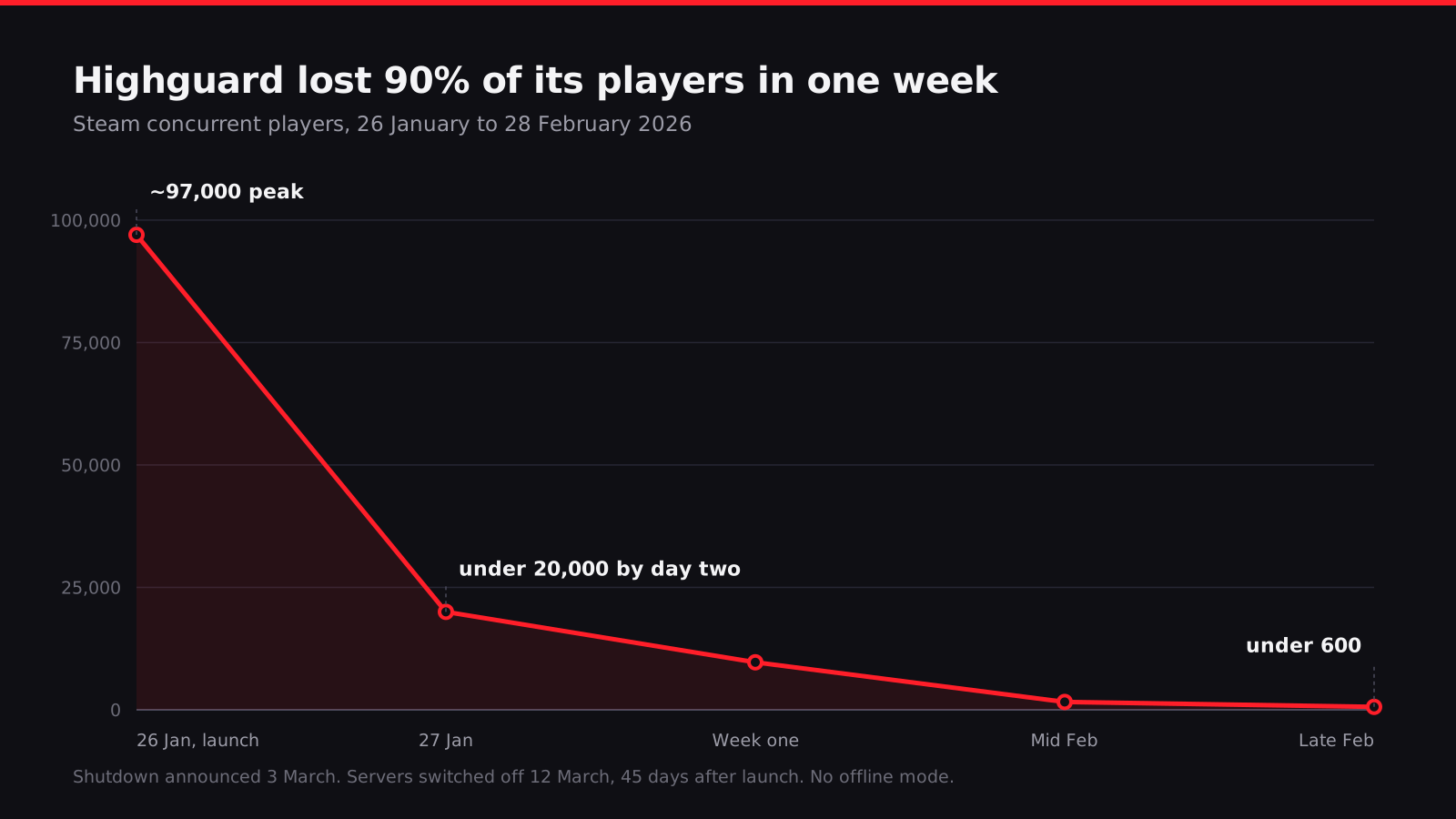
Layoffs were confirmed within two weeks of launch, on 12 February. The shutdown was announced 3 March, servers went dark on 12 March. Launch to death: 45 days. There’s no offline mode, so the game isn’t sitting dormant on anyone’s hard drive waiting for a private server community to revive it the way some older MMOs get resurrected. It’s gone. Completely. Sony started issuing automatic PS5 refunds on 18 March, which is genuinely the right call and more than a lot of publishers bother doing. It’s also, if you think about it for more than a few seconds, an admission. You don’t refund people for a product that still works.
Wildlight’s official line after the shutdown was that they were “proud of the team, talent, and the product we’ve created together.” I believe that’s sincere, honestly, studios rarely enjoy watching something they built get switched off. But pride doesn’t change the fact that dozens of people bought a full-price game in January and had nothing to show for it by March, with no legal mechanism anywhere that would have required Wildlight, or Tencent, to do anything differently.
The disc that was already dying
Sony’s other big 2026 decision landed on 1 July, a few weeks after the Commission’s answer to Stop Killing Games, and it’s a strange companion piece. Sony announced it will stop producing physical PS5 game discs from January 2028, meaning every new PS5 game after that point ships digital-only.
The backlash was immediate and, by most accounts, unusually broad. This wasn’t just online grumbling. Legal challenges came from consumers, retailers, consumer protection organisations, studios and legislators, which is a wider coalition than most gaming controversies manage to assemble. Sony’s response was to say it would handle the transition “cautiously,” a word choice that somehow made things worse rather than better, because it drew a fresh round of criticism from people who read “cautiously” as “we’re doing it anyway, just slower.”
GameStop CEO Ryan Cohen dismissed the whole thing as “totally irrelevant” to his company, which is a little rich given GameStop’s entire original business model was built on physical media, but it’s also honest. GameStop has been pivoting toward collectibles for a while now, and a decision like this just confirms the direction they’d already picked.
Here’s the tension I think is worth sitting with, though, because it’s genuinely two-sided. By Q1 of Sony’s FY2026, 82% of its full-game sales were already digital. Four out of five people buying PS5 games weren’t buying a disc anyway. In a narrow commercial sense, Sony isn’t killing something people were using, it’s formalising what already happened. Discs on shelves were increasingly a museum piece even before the announcement, kept alive mostly by the minority who specifically want ownership of a physical object, or who buy secondhand, or who just like having a shelf.
But that minority is exactly the group Stop Killing Games and the whole ownership conversation is about. A disc, whatever else you think about it, is a thing you hold. It doesn’t need a server to boot. Nobody can revoke it remotely. When Sony phases that out entirely, it’s not removing a popular option, it’s removing the last option that guaranteed you’d still have the game in ten years regardless of what the publisher decides to do with its infrastructure budget. The fact that most people had already stopped using that guarantee doesn’t make it worthless. It makes it a guarantee most people were quietly giving up without really weighing what they were trading it for.
A graveyard with a printed schedule
What makes 2026 different from previous bad years for live-service games isn’t just the volume of shutdowns. It’s that a chunk of next year’s shutdowns are already scheduled, publicly, while the games are still on sale.
Amazon announced on 12 August 2026 that it’s handing back its publisher role on both Lost Ark and Throne and Liberty by early 2027, on top of cancelling its Lord of the Rings MMO mid-development back in May. And several games already carry a printed expiration date for 2027, meaning you can walk into a store right now, hand over money for something, and know in advance roughly when it stops existing in its current form.
Here’s the roll call, condensed:
| Game | Shutdown date |
|---|---|
| Anthem | 12 Jan 2026 |
| Beat Saber (PS4/PS5) | 26 Jan 2026 |
| Highguard | 12 Mar 2026 |
| The Finals (PS4) | 18 Mar 2026 |
| Genshin Impact (PS4) | 8 Apr 2026 |
| Fortnite: Ballistic | 16 Apr 2026 |
| Call of Duty: Warzone Mobile | 17 Apr 2026 |
| Destruction AllStars | Announced 27 May 2026 |
| New World | 31 Jan 2027 |
| The Kingdom of the Winds: Yeon | 12 Feb 2027 |
| PGA Tour 2K23 | 12 Mar 2027 |
| Lego 2K Drive | 31 May 2027 |
| Kingdom Hearts Integrum Masterpiece | 9 Jun 2027 |
| TopSpin 2K25 | 31 Dec 2027 |
Some of these are old games nobody’s shocked to see retired. Destruction AllStars ran for five years before Sony called it, which is a perfectly reasonable lifespan for a PS5-exclusive live service title that never quite found its audience. Nobody’s owed infinite server uptime for a game that undersold its whole existence.
But TopSpin 2K25 sitting on a store shelf with a 31 December 2027 death date already attached is a different thing entirely. That’s not a game that failed and got put down. That’s a product with a printed expiry, on sale, right now, and the buyer has no way to know that from the box.
Contrast this with what Bungie did with Destiny 2. Bungie ended the game’s live-service content on 9 June 2026, its final major content drop, after Sony had already booked roughly $765 million in impairment losses tied to Bungie’s underperformance and laid off close to 300 people. That’s a studio in genuine financial trouble. But the game itself stays online and playable, the way the original Destiny still does. Nobody’s account got wiped. Nobody has to wonder if they’ll be able to log in next month. It’s proof the industry knows how to wind down a live game responsibly when it wants to. Highguard proves it also knows how not to.
Valve and the question of what you actually bought
Stop Killing Games is about games disappearing. There’s a parallel fight happening in New York about what you’re buying while the game still exists, and it’s arguably just as important to the ownership question.
New York Attorney General Letitia James sued Valve on 25 February 2026 over loot boxes in Counter-Strike 2, Team Fortress 2 and Dota 2, arguing they constitute illegal gambling under New York’s constitution and penal law. Her language wasn’t subtle. “Valve has made billions of dollars by letting children and adults alike illegally gamble for the chance to win valuable virtual prizes,” the suit alleges, calling loot boxes “quintessential gambling” and stating plainly that the features are “addictive, harmful, and illegal.”
Valve’s response, filed 12 March 2026, leaned on a comparison that’s honestly not a bad one on its face. Mystery boxes, Valve argued, “are widely used, not just in video games but in the tangible world as well,” pointing to baseball card packs and blind box toys as an equivalent. Its stronger point, I think, is the transferability angle: Valve argues that because CS2 and Dota 2 items can be traded and sold on an open market, unlike a loot box in a game with no secondary economy, “transferability of a digital game item is good for consumers.” That’s a genuinely different situation from a mobile game that sells you randomised pulls with zero resale value. Valve also says it doesn’t cooperate with third-party gambling sites and has locked over one million Steam accounts tied to gambling misuse, which is a specific, checkable claim rather than a vague gesture at good faith. Valve says it would comply with dedicated mystery-box legislation if New York’s legislature actually passes one. The case is still active.
I don’t think this case and Stop Killing Games are the same argument, but they rhyme. Both are about the gap between what a storefront implies you’re buying and what you’re actually getting. A loot box implies you’re purchasing a chance at an item. A digital game purchase implies you’re buying the game. In both cases, the actual legal reality underneath the purchase is a lot thinner than the marketing suggests, and regulators in two different jurisdictions are now poking at that gap from two different angles in the same year.
Preservation happens in spite of the industry, not because of it
Not every preservation story in 2026 is about a corporation deciding to be slightly less bad. Some of it is happening at the level of libraries and archivists doing the unglamorous work with basically no institutional backing.
A game-preservation project at UNC Greensboro’s library had its funding cut and then got restored, a small story compared to Sony’s disc decision or a European Parliament hearing, but it’s arguably the more honest picture of what preservation actually looks like day to day. It’s not a headline policy. It’s librarians and archivists fighting to keep budget lines open so old cartridges and discs stay playable on donated hardware, one grant cycle at a time, with none of the leverage that a company the size of Sony or Valve has.
So what actually changes
Nothing changes in the way the law works, not yet. That’s the honest answer. The Commission’s position is that it legally can’t mandate playability, and I’ve tried to give that argument its due, because a blanket rule really would create real problems for games that genuinely can’t survive without ongoing infrastructure. But “can’t mandate perpetual servers” and “won’t require any end-of-life plan at all” are two very different positions, and the Commission’s answer collapsed them into one.
What’s left is a voluntary code nobody has to sign and nobody has to keep. Highguard existed and then didn’t, in 45 days, with a refund as the only acknowledgement that something had gone wrong. Sony is quietly retiring the one format that never needed a server to work, at the exact moment a court in New York is arguing about whether the industry’s other favourite monetisation trick counts as gambling. None of these things required new laws to happen. They happened under the rules that already exist, because the rules that already exist don’t actually require a company to keep a promise once you’ve paid for it.
The only leverage left, realistically, is the one thing regulators can’t legislate into existence: people deciding not to buy things that can be switched off. That’s a genuinely bad substitute for a legal guarantee, because it depends on a critical mass of players caring enough, early enough, before the pre-order numbers already lock a studio’s next decision into place. But it’s what’s on the table right now. Brussels made that pretty clear on 16 June.
Read next

The Steam User Review Replaced the Professional Review, and It's a Mess
Paid early access, launch-day embargoes, and missing review code have pushed professional criticism out of the purchase decision, leaving Steam's flawed user review system to do the job instead.
The Steam Machine is the most principled console you probably shouldn't buy
Valve's six-inch cube costs $1,049 because Valve refuses to sell hardware below cost. Here is whether that principle, and the engineering behind it, justifies the money.

Live Service Games Are Built to Die and Nobody Wants to Say It
Highguard lasted 45 days and Destiny 2 lasted a decade, yet both ended the same way. Here's what that says about a business model that can't survive missing.