
The case against preordering, from someone who used to do it constantly
Paid early access moved buyers ahead of reviews and publishers noticed. Here is how the modern release cycle got built, and why waiting two weeks costs you nothing.
I preordered games for about fifteen years without ever once asking why. It was just what you did. Then in 2025 I watched a publisher sell a hundred dollar edition whose main feature was playing five days before anyone could tell you whether the game worked, and something finally clicked. The preorder isn’t a purchase anymore. It’s a bet placed before the odds are published.
And the people setting the odds know exactly what they’re doing.
What you’re actually buying
Let’s be precise about the product, because the marketing works hard to blur it.
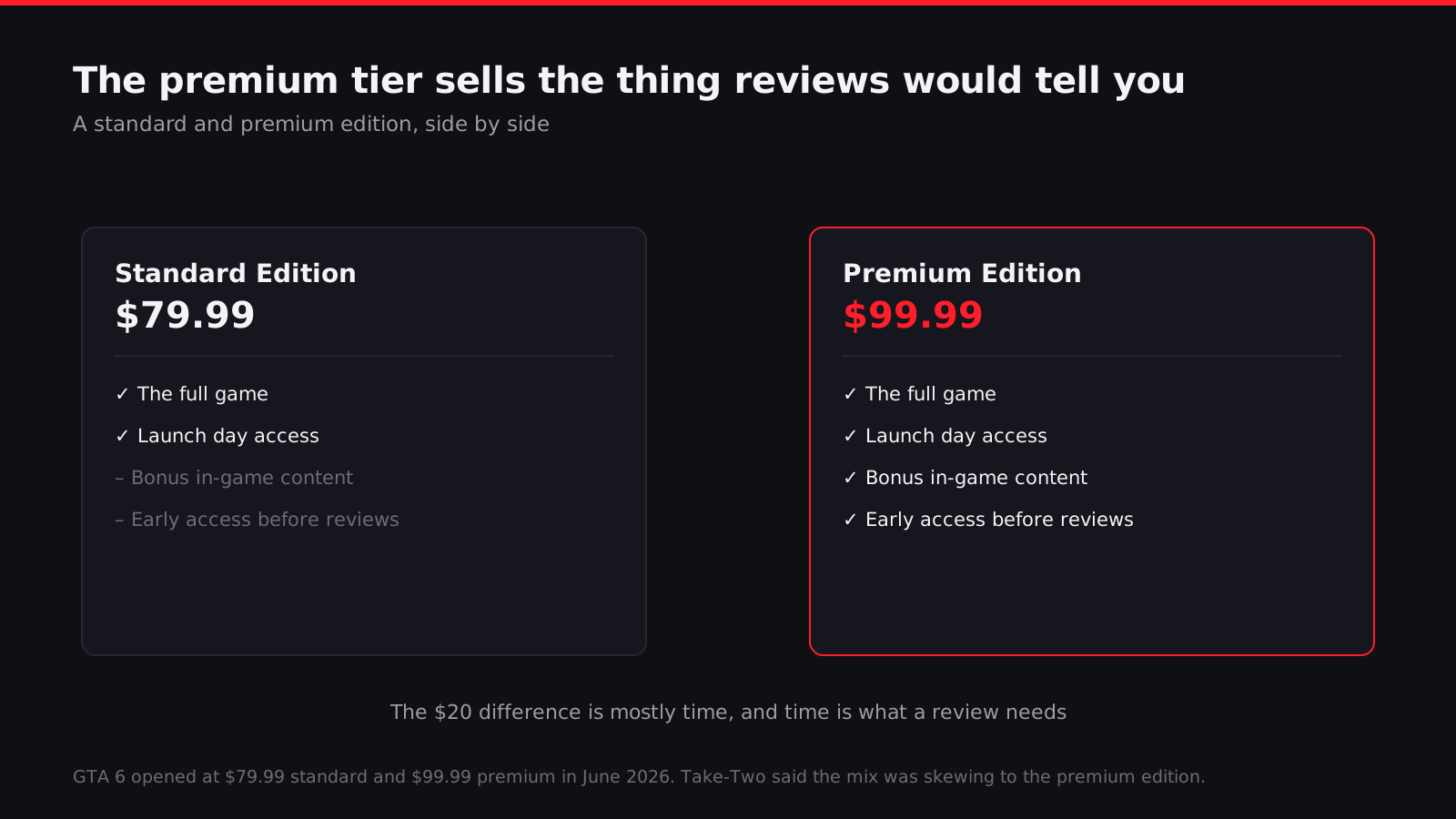
A standard edition gets you the game on release day. A deluxe or premium edition, typically thirty to forty dollars more, gets you cosmetics, some DLC, and the thing that actually moves units: a head start. Two days. Three days. Five, if you paid a hundred.
The examples are not hypothetical. Star Wars Outlaws shipped on a Friday in August 2024 and let Gold and Ultimate buyers in on the Tuesday. Doom: The Dark Ages gave premium buyers two days in May 2025. Metal Gear Solid Delta: Snake Eater did a flat forty eight hours for Digital Deluxe in August 2025. The Outer Worlds 2 went furthest, with a hundred dollar Premium Edition carrying five days of early access. And Tempest Rising sold a seven day window, which is genuinely absurd for a paid head start.
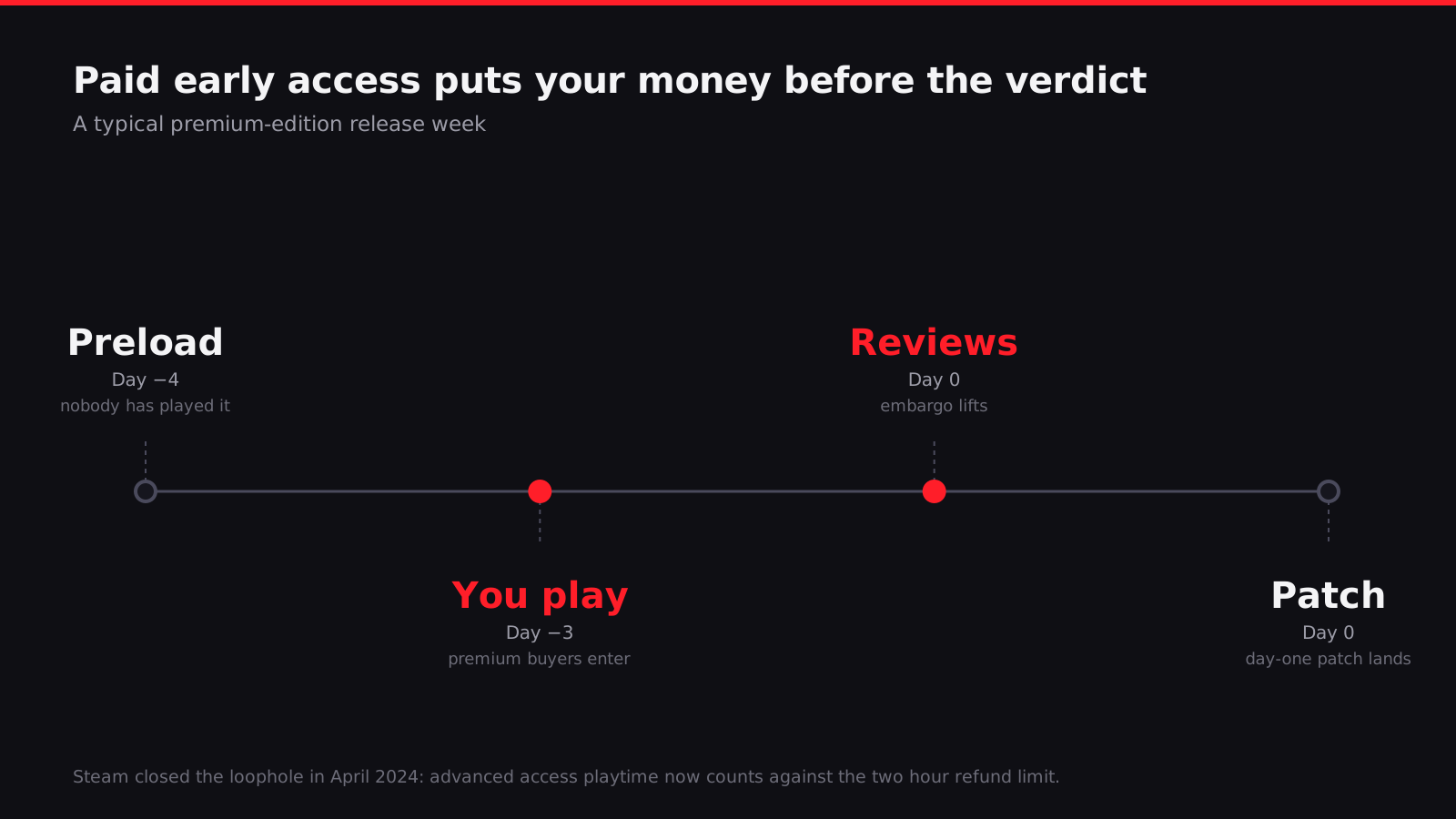
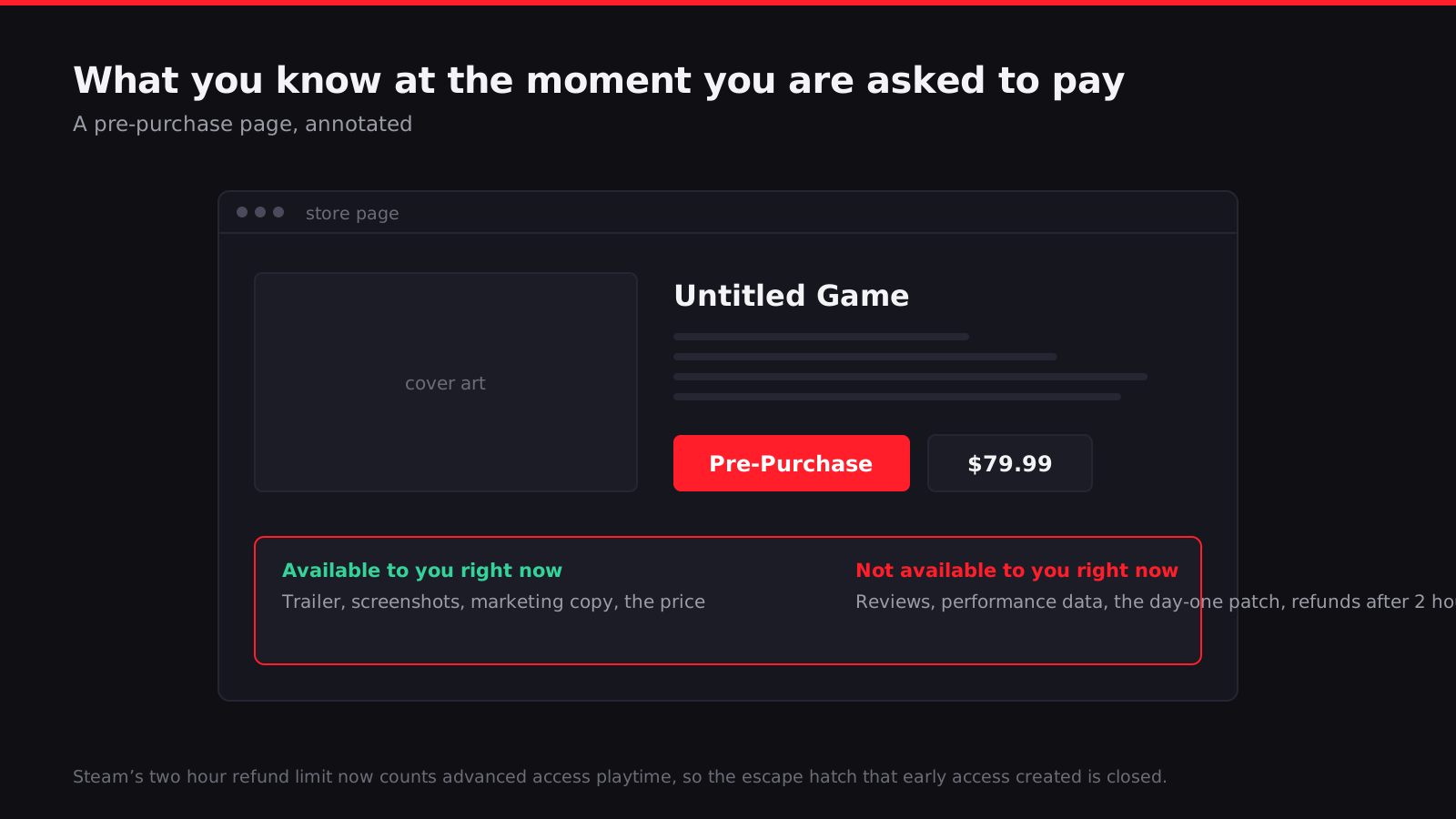
Here’s the part that should bother you. Reviews go up on or near the standard release date. So a three day window means paying customers are inside the game, and inside the refund window, before a single independent verdict exists.
That’s not a side effect. That’s the mechanism.
The bit where reviewers stopped getting the game
For a long time the counterargument was that reviews would arrive eventually and the truth would out. Fine. Except two of the more instructive cases from the last couple of years involve reviews not arriving at all.
Borderlands 4 launched on 11 September 2025. PC Gamer, an outlet whose entire identity is testing whether games run on PCs, was offered access at launch only, while other outlets got early code. Editor Tyler Wilde said so plainly, noting that 2K had provided early review copies to a number of media outlets but that PC Gamer was offered access at launch only. They flagged specific interest in the game’s unusual eight core CPU minimum. Their review didn’t publish until a week after release.
Think about what that means in sequence. The game had a hardware requirement weird enough that a specialist outlet wanted to poke at it. That outlet got cut out of the early window. And PC performance became the defining story of the launch.
Then in May 2026, 007 First Light hit its embargo date with PC Gamer still holding no code whatsoever. Their reviewer wrote a piece explaining the absence rather than staying quiet about it, admitting they hadn’t actually received the requisite code. Everyone else ran on the day. The roundup headline was that it was the best Bond game since GoldenEye, which, sure, but the outlet best placed to check the PC build wasn’t in the room.
A launch day embargo doesn’t hide a bad game. It just makes sure the people who already paid can’t unpay in time.
I want to be careful here. I have no evidence either publisher deliberately targeted a specific outlet to suppress performance coverage. Codes go missing, PR lists get mangled, launches are chaos. But the pattern is the pattern, and it happened twice on games where PC performance turned out to matter.
Steam quietly made your position worse
Here’s the thing nobody talks about. Paid early access created an obvious loophole. Buy the deluxe edition, play the entire three day window, refund on launch day, keep nothing but the memories. Valve’s two hour playtime limit didn’t trigger because the fourteen day refund clock started at official release, not purchase.
Valve closed that in April 2024. Advanced access playtime now counts against the two hour limit. The fourteen day window still starts at release, and beta playtime is still untracked, but the practical effect is clear enough: the escape hatch that early access accidentally opened has been welded shut.
I don’t think Valve was wrong to do it. The loophole was being abused and it’s not sustainable to let people play a full weekend for free. But look at the net position. Publishers gained a product that collects money before reviews. Then the storefront removed the one accidental consumer protection that product had created. You are more exposed now than you were in 2023.
Makes sense from Valve’s side. Doesn’t make it good for you.
The one time it went hilariously wrong
Tempest Rising is my favourite story in this whole mess. Slipgate Ironworks and 3D Realms had sold a seven day advanced access window as a Deluxe preorder bonus, targeting a 24 April 2025 release. On the seventeenth, the early access flag flipped on for everybody.
Their response was the correct one, and also a bit funny. They decided the cleanest fix was to just release the game to everyone, made the seventeenth the official launch date, and promised Deluxe buyers some exclusive in game content as compensation for the head start they had bought and then watched evaporate.
The game did fine. Very Positive on Steam, 85% from PC Gamer. Nothing bad happened because everyone played at once.
Which is sort of the point.
Ubisoft actually backed off, and it’s worth noticing
Credit where it’s due. In October 2024 Ubisoft announced via Discord that there was no early access for Assassin’s Creed Shadows anymore. The collector’s edition dropped from $280 to $230 to reflect the removed feature. The stated reason was letting all players enjoy the game at the same time.
They stuck with it. When Shadows eventually shipped on 20 March 2025, no edition got an early unlock. Steam unlocked simultaneously worldwide, with Ubisoft store PC copies going up to six hours earlier in Europe, which is a rounding error compared to a three day window.
So it can be done. A major publisher looked at paid early access, decided it wasn’t worth the goodwill, cut the price to match, and shipped. The sky stayed up.
Plus, and this is the useful bit, Ubisoft said in February 2025 that Shadows preorders were tracking solidly, in line with Assassin’s Creed Odyssey, which was the second most successful entry in the franchise. After months of extremely public fighting about the game. So removing the head start didn’t obviously cost them anything.
Obsidian made a joke about it, inside the game
The Outer Worlds 2 contains a character flaw called Consumerism. Its description reads that you’re the reason their marketing works, that promotions and sales have riddled your brain, and that you’re more interested in buying the next big thing than financial planning. Mechanically it cuts vendor prices by ten percent while making purchases fifteen percent cheaper, so a net five percent, and unlocks some dialogue.
This is in the game that sold a hundred dollar edition whose headline feature was five days of early access.
I laughed. I also think PC Gamer’s read was right, which is that self awareness is deflection. Knowing the joke and telling it well doesn’t stop you from running the practice. If anything it inoculates you, because now anyone who complains is the humourless one who didn’t get the bit.
Still funny though.
Where this goes next: preordering things that don’t exist yet
If you want to see where the logic ends up, look at battle passes.
In May 2026, EA opened preorders on Battlefield 6’s Season 3 pass before showing what was in it. Standard was 1,100 Battlefield Coins, about ten dollars. The BF Pro version was $24.99 in actual cash. Buy early, get instant cosmetic weapon packs and tier skips when the season starts.
Season 3 launched 12 May 2026. For context, Battlefield 6 opened at 750,000 concurrent Steam players and was down to roughly 50,000 daily by that point.
So: preorder a season pass, for a game losing players, containing content nobody has seen, for a season that hasn’t started. Every layer of uncertainty that makes preordering a game questionable, stacked four deep.
Yeah. That’s where it goes.
The counterargument, stated properly
Let me steelman it, because there’s a real version.
One. Some games genuinely don’t need reviewing for you specifically. If you have four hundred hours in a franchise and the sequel is more of the same, an outsider’s score is close to worthless. You already know.
Two. Preorders help publishers forecast. Server capacity, physical stock, marketing spend. This is true and it’s a legitimate business need, though I’d note that the money arriving three days early does very little forecasting work compared to the preorder itself.
Three. At the very top of the market, preorders are clearly healthy and people are choosing to spend more. GTA 6 preorders opened 25 June 2026 at $80 standard and $100 premium. In August, Strauss Zelnick said the mix was skewing more to the premium edition, while sensibly noting that might just reflect the most avid consumers being the ones who preorder early.
That third point deserves an eyebrow. PC Gamer’s read was that the $100 premium edition paywalls stores and items that are core to the game’s identity, which makes GTA 6 effectively a hundred dollar release wearing an eighty dollar label. Take the point or don’t. But “the premium tier is selling well” and “the premium tier is well designed for the customer” are different claims.
What actually happens if you wait
Two weeks. That’s the whole ask.
In two weeks you get review scores from people who finished it. You get the day one patch, which is often enormous. Borderlands 4 shipped a 2.7 GB patch that reduced crash frequency and arrived after launch, which is a sentence that should be read twice. You get Steam user reviews from thousands of people on hardware like yours, which is frequently more useful than any professional review for the specific question of whether it runs.
You also get the second patch. And usually the third.
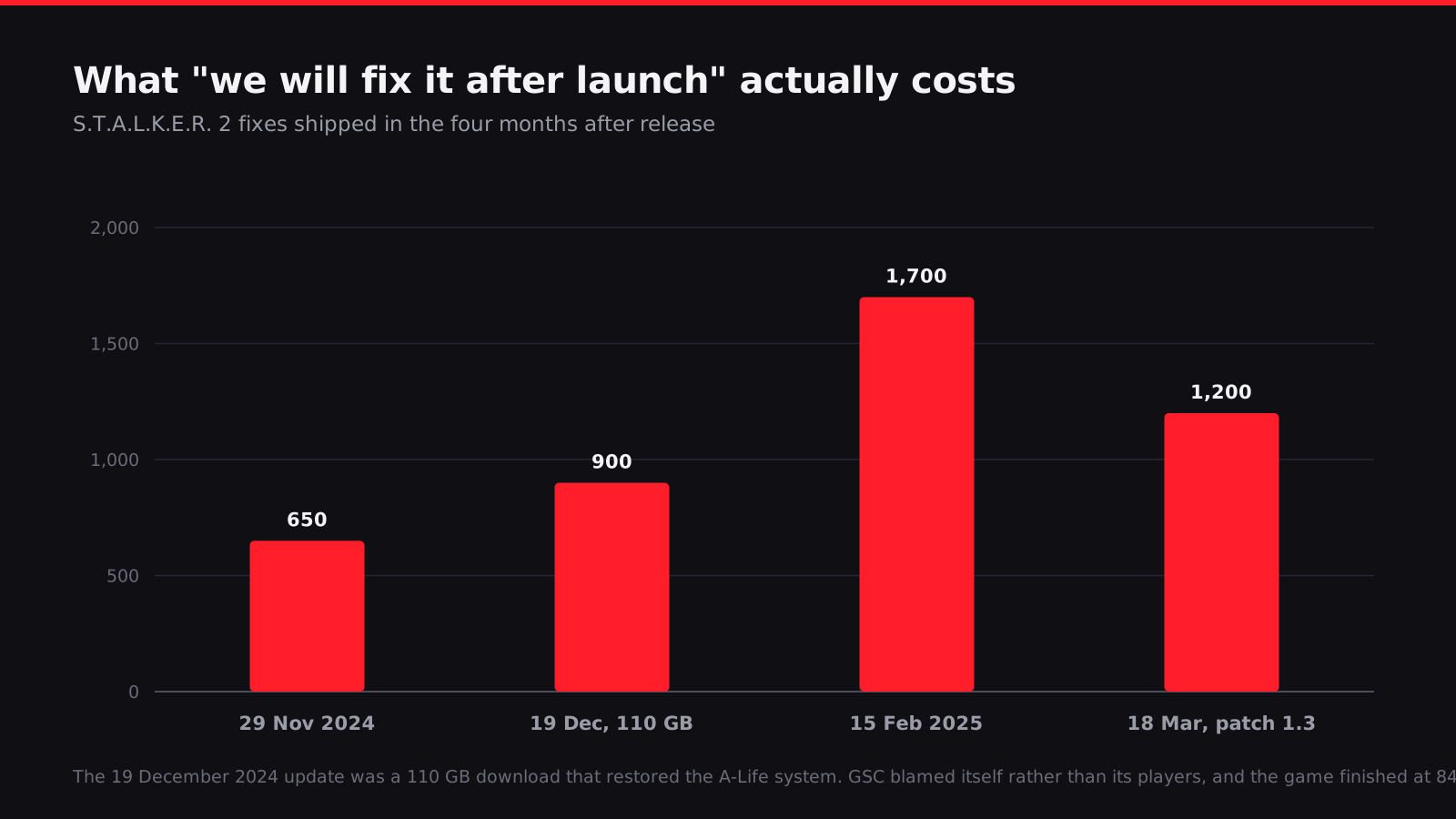
S.T.A.L.K.E.R. 2 is the extreme case. First patch on 29 November 2024 with over 650 fixes. Second on the thirtieth. Third on 3 December. A 110 GB patch at Christmas. Over 1,700 fixes in February 2025. Patch 1.3 in March with more than 1,200 changes including nearly a hundred crash fixes. Anyone who waited three months played a substantially different and better game than the launch buyers, for the same money or less.
And you might just get it cheaper. Not always, and not on Nintendo first party, and Take-Two has said out loud it preserved GTA 5 pricing for a very long time compared with a standard release. But often.
Most people already figured this out
PC Gamer ran a reader poll in June 2026. The results:
| Buying habit | Share of respondents |
|---|---|
| Wait exclusively for sales, never pay full price | 25% |
| Pay full price only for highly anticipated releases | 51% |
| Full price on cheap indies, wait for sales on AAA | 18% |
| Consistently buy at full price | 4% |
| Preorder | 3% |
Three percent.
Now, be honest about what this is. It’s a self selected poll on an enthusiast PC site with no published sample size. It is not a representative panel and I’m not going to pretend it is. Directionally strong, methodologically weak.
But three percent is a striking number even with heavy discounting. The audience most engaged with PC gaming, most likely to be excited about upcoming releases, has almost entirely stopped putting money down in advance. That’s not apathy. That’s a learned response.
The thing that actually predicts whether a launch recovers
I’ve been reading through a lot of broken launches for this piece and one pattern is much stronger than I expected. It isn’t how broken the game was. It’s who the studio blamed.
S.T.A.L.K.E.R. 2 launched in genuinely rough shape and GSC said so. Studio head Ievgen Grygorovych explained that after fourteen years of development, crunch and relocating from Ukraine during the invasion, the team was so tired they’d have died if asked to run another marathon. That’s an extraordinary thing to say publicly. The game finished at 84% positive on Steam across 62,000 plus reviews and won PC Gamer’s Game of the Year.
Crimson Desert launched in March 2026 to Mixed reviews and would not boot at all on Intel Arc GPUs, with players being told to refund. Pearl Abyss patched aggressively and announced 2 million copies in under 24 hours, 4 million by 1 April, 5 million within the month.
Now the other side. Gearbox’s Randy Pitchford responded to Borderlands 4 performance complaints by saying it was a premium game made for premium gamers, that it couldn’t be expected to run on too old PC hardware, and that if you’re trying to drive a monster truck with a leaf blower’s motor you’re going to be disappointed. He then argued that only 0.04% of customers filed performance tickets and only 0.009% were valid problems.
PC Gamer’s rebuttal to that statistic is the smartest thing anyone said during the whole episode: players who hit bad performance leave negative reviews, they don’t file support tickets. The ticket rate measures nothing except how many people knew there was a ticket system.
Take-Two’s Zelnick later said in November 2025 that the numbers were a little softer than they would have liked, attributing it to PC performance. Though an analyst reading in October had it as the fastest selling entry in the series and the third most bought game of 2025, so both things can be true. Record sales that still undershot the plan.
Cities: Skylines II blamed the engine. MindsEye blamed bot farms and saboteurs, and its publisher’s CEO publicly declined to endorse the theory, saying he didn’t believe it and the game should speak for itself. Both studios lost their publishing relationships.
So the studios that owned it recovered. The studios that pointed at customers or conspiracies did not. If you’re deciding whether to trust a preorder, the studio’s last public statement about a rough launch tells you more than any trailer.
The refund window is quietly becoming a selling point
One more thing worth watching, because it cuts the other way and I want to be fair.
A few developers have started treating refund generosity as a feature rather than a liability. PlayerUnknown’s Prologue went free-to-own in June 2026 and offered Steam refunds without restrictions on playtime or how long ago you bought it. The Space Marine remaster shipped with an extended refund window plus a discount for owners of the original. Paradox went furthest back in August 2024, delaying Prison Architect 2 and refunding preorders outright so it could improve performance and content.
There’s a Battlefield 6 player who successfully claimed a Steam refund after four hundred and seventy hours because a mode got removed. Four hundred and seventy. I have no idea how that conversation went and I would pay to read it.
The pattern underneath these is the same one Ubisoft found with Shadows. When a publisher voluntarily gives up leverage over the buyer, very little bad happens to them commercially, and they get a reputation bump that is worth more than the leverage was. Paradox delayed and refunded, and the thing people remember is that Paradox delayed and refunded.
Compare that to the studios in the next section, who spent their credibility defending a launch instead of fixing it. Cheaper to just refund people.
What I do now
I keep a wishlist and I let it sit. When something releases I wait for the Steam user review count to get past a few thousand, then I read the negative ones specifically, filtered to my language, sorted by recent. Ten minutes of that is worth more than any score.
If it’s a studio with a genuine track record of shipping clean and owning mistakes, I’ll buy week one at full price. Happily. There aren’t many of those and I think they’ve earned it.
I have not preordered anything since 2024 and I cannot identify a single thing I lost by stopping.
Turns out the head start was never the product. The product was your money arriving before the information did.
Ubisoft dropped early access on Shadows and the preorders held. Slipgate accidentally gave everyone the head start and the game did fine. The evidence that this practice is load bearing is remarkably thin, which makes me suspect it survives mostly because nobody with the power to kill it has any reason to.
That leaves you. Three percent of PC Gamer readers already worked it out.
Read next
What Indie Breakouts Actually Cost, and Why the Numbers Don't Add Up
PEAK broke even in hours on a budget under $200,000. But indie sales numbers are a mess of copies, players and estimates dressed up as fact, and that's the story.
The Steam User Review Replaced the Professional Review, and It's a Mess
Paid early access, launch-day embargoes, and missing review code have pushed professional criticism out of the purchase decision, leaving Steam's flawed user review system to do the job instead.
The Steam Machine is the most principled console you probably shouldn't buy
Valve's six-inch cube costs $1,049 because Valve refuses to sell hardware below cost. Here is whether that principle, and the engineering behind it, justifies the money.